


Some parents just don't want to be bothered with what their teenager is doing behind their back. But for those of us who want to know just how responsible our teen is behind the wheel or who wish they had a way of tracking their teen the future is upon us.
According to an article on Slashdot A Japanese firm has created new technology that enables GPS units to be embedded in clothing that will enable the wearer to be tracked continuously, even by video or on mobile devices. A mom could track her teens activities from her cell phone or from her computer at work.
If that isn't enough, most parents these days have heard of the devices that can keep a log of how fast their teen is driving, but if that isn't enough, check out the newest models at youthdrivingsafe.org that not only tell you their speed but will enable you to remotely turn off the car engine, flash the lights and honk the horn, get instant notification if your teen goes somewhere you have made off limits and find their exact location.
In the world of high tech toys and titillating teen temptations, parents are well advised to keep up with the age of technology and be willing to use whatever means necessary to keep their teen safe.
Wednesday, September 26, 2007
Teens, Technology & Titillating Temptations
Wednesday, March 07, 2007
Teens - Take Control of Your Own Life
One of the most difficult things for a teen to do is to look deep inside themselves and figure out who they are. And yet this is the reason for the teen years, to discover what path you want to follow in life. Peers can offer teens the instant gratification of feeing accepted and "normal," and they can also help you make decisions about who you will eventually become. But often the choices your friends offer you are detrimental to your future happiness.
Close your eyes and imagine an adult that you admire; imagine their personality, their best qualities and the positive ways they structure their life. What qualities does this person have that you would like to have? How can you begin to develop these traits? Once you have identified the type of qualities you want to develop write them down so that you can remember them, especially when things get rough. Make a commitment to conduct your life in a way that will help you become the person you've designed for yourself. When you are confronted with peer pressure, remember this exercise and make choices according to who you want to be.
Your friends may or may not have the ability to see what is best for you in the long run. Most teens don't. Every time you give in to peer pressure, you loose a little piece of yourself. And you get closer to forgetting how to make decisions based on your own desires rather than on the desires of others. Take control of your life, create your own power and be assertive. It will pay off.
Wednesday, January 17, 2007
Teen Violence - A Parenting Dilema

Three female teens from a public school in Long Island have been under investigation for battery and harassment due to videotaping themselves while beating up a 13 year old girl from a private school. The case came into the spotlight when the video was made public on You-Tube and 2 other public video sites. The girls reportedly had words “about a boy” earlier on My Space which led the 3 older teens to plan an attack on the younger teen.
Scenes like this have become all too common in today’s technological era. But are videophones and the internet to blame? Hardly.
Today on Larry King Live, 4 professionals were interviewed regarding the issue and all agreed that the parents of the 3 teens need to take some responsibility for the violent and criminal actions of their daughters. Most of today’s teens have access to cell phones and the internet but only a certain percentage of them use these devices to commit crimes.
Gone are the fantasies of the 80’s which touted that a parent can be just as effective from the office as from home. Studies are repeatedly showing that kids who are raised by two working parents are far more likely to engage in criminal behaviors than those who have at least one parent who stays at home to raise them.
Too often parents believe that they can go back to work once their child hits the teen years. Not so. Teens are especially vulnerable to depression, feelings of abandonment and anger, and they need the frequent interaction and assurance of a stay-at-home parent to help them feel secure in their confusing and insecure world.
If your teen is acting out, it is a clear sign that s/he is angry. And it takes a responsible parent to be able to understand what role they may be playing in their child’s anger. Healing the feelings of your child may require changes in your family’s lifestyle, but in the end it will be worth every effort.
Photo Source: http://www.boston.com
----------------
Now playing: Dr. Laura Show
via FoxyTunes
Thursday, December 14, 2006
Dealing With Teens That Act Out
 Frequently a parent will come to me, exasperated and tell me about how their teenager has suddenly become someone they don’t recognize anymore. The individual stories range dramatically from failing grades, hyper sexuality, stealing, and drugs or just about anything a teen can think of to get into trouble with authority figures. More often than not, the confused parent feels helpless to change the situation, and also feels guilt for contributing to the problem in some way.
Although the answer to their questions is simple, implementing change is not. For most parents the first line of attack is discipline. And while discipline is necessary most of the time, it is not enough to stop the bad behavior from continuing. The reason for this is that discipline only addresses the outwardly noticeable symptoms of the teen’s problem.
Teens are still children, and like children they haven’t developed sufficient skills to recognize, label and verbalize their most intense feelings. So when they are feeling overcome with fear, rejection, or self loathing, they express the intensity of their feelings in a venue that allows equal emotional release, such as breaking the law, giving up in school or becoming promiscuous.
Consequently, discipline isn’t enough. If a parent is to re-direct their teen once they have started down a destructive path, it is vital that they search for the underlying cause of the teen’s emotional pain. To do this effectively the parent has to be willing to look at their own behavior and life choices and how those choices may have contributed to the teen’s behavior. Introspection requires a little humility but remember this isn’t about you it is about saving your teen from self destruction.
Common themes to look for are:
• Recent loss of a family member or friend (separation, divorce, death)
• Changing schools
• Experiencing an abusive or otherwise traumatic event(s)
• Re-marriage or introduction of a new adult in the home
• Illness of a parent (including alcoholism, physical and/or mental illness)
• Feeling like the family’s scapegoat
• Over protective, over controlling parent (set up for rebellion)
• Not fitting in with peers
• Onset of emotional or mental illness (feeling like they are going crazy) Finding time to frequently talk with your teen is essential if you are to help them open up emotionally. One great conversation just won’t do it. The teen will feel safer once a pattern of openness has been established. When you are talking be careful not to appear as if you are trying to pry out information. Teens are very astute listeners and will detect a trap as soon as they feel threatened. Validate their feelings instead of trying to change them. This isn’t lecture time; it is sharing time; time to create bonds and a safe place to express oneself.
And be honest about how you have influenced their life emotionally. If you started dating again after the loss of their father, be willing to acknowledge how that has brought up intense feelings in the teen. Don’t attempt to justify yourself, or your choices. Remember, this isn’t about you!
Teens act out because they haven’t learned the tools to deal with life’s difficulties in a mature, productive manner. Be an example to your teen. Help him/her learn how to deal with life by observing your behaviors.
In extreme cases if your teen is engaging in activity that is illegal or has a potential to become destructive to self or others, it may be necessary to involve the juvenile justice system or a community rehabilitation center. This is not a good time to be in denial. Your denial will only validate your teen’s denial. If you wait until legal authorities are forced to take over you will have lost precious time and your teen will have lost much more. Now is the time to step up and be the parent. Be the one willing to take charge and get something done. Your teen may protest now, but eventually, s/he will be grateful they had a parent that was willing to drop everything to come to their rescue.
----------------
Now playing: KXNT
via FoxyTunes
Tuesday, December 05, 2006
Teens and Discipline
IN THE NEWS-->
DECEMBER 5--A South Carolina boy, 12, was arrested Sunday morning after his mother called police to report that he had unwrapped a Christmas present without her permission. The police charged the juvenile with petty larceny. The boy's mother, 27, said that she hoped his arrest would serve as a corrective to disorderly behavior at school and home.
EDMOND, Okla. - Tasha Henderson got tired of her 14-year-old daughter's poor grades, her chronic lateness to class and her talking back to her teachers, so she decided to teach the girl a lesson. She made Coretha stand at a busy Oklahoma City intersection Nov. 4 with a cardboard sign that read: "I don't do my homework and I act up in school, so my parents are preparing me for my future. Will work for food."
Each generation seems to have spawned a few new parenting styles that seem new, innovative or just plain different than previous generations. Sometimes these unusual parenting styles make the news because they create controversy and debate. Recently I read about a minority of parents who believe that children themselves should be allowed to make all of their own decisions including weather or not they go to school, what they eat, when they sleep. These parents believe that by raising their children with no punishment and no rules that they are raising "free thinkers." Twenty years from now the research done on the outcome of such parenting will be interesting to say the least.  Parents make decisions about how to raise their children everyday. Even refusing to make a decision is in fact making a decision, because either way the child is reared in a particular style that is created in the home. One thing that has been researched and reported on since the beginning of time is the fact that children, teens especially, learn more by their parent's examples than from their words.
For instance, in the 80's it was common to hear young adults claim that instead of raising children in a particular religion, they were going refrain from teaching any religious theme, and instead, let the child choose for themselves. It was nice sounding rhetoric for people who didn't want to commit themselves to religious beliefs, but it didn't do what they claimed it would. Instead, children who were raised with no religious training grew up to believe that they had no need for it. So instead of "choosing for themselves," they chose as they were shown - "nothing."  Our children learn how to live by what we show them, what we infer to them and what they sense from us. Taking no disciplinary stand at all will result in children who are undisciplined. Over reacting and over protecting our children will produce teens who are so eager to make their own way that they explode into the world unprepared and often, rebellious. Parenting through guilt techniques creates weak minded children who grow to become un-driven adults. Parenting through violent techniques will produce children/adults who are violent minded, who learn to turn off their feelings and who may become sociopathic, unable to feel empathy for others.
So the debate roles on. We can criticize others for the ways they discipline their teens, and sometimes criticism is deserved, but more likely it is our own parenting techniques that we need to focus on. None of us are perfect parents, but all of us have room for improvement. And most of all, our teens need us to be parents, not their friends. They need the structure they detest and the quality family time they roll their eyes at. They need positive reinforcement and consistent consequences. Parenting a teen can be difficult, but if you put your whole self into doing it the best you can, the rewards will make it all worth while.
----------------
Now playing: KXNT
via FoxyTunes
Thursday, November 30, 2006
How to Talk to Your Parents

I like to compare teenagers to pups that are about six months old. They are full of energy and playful. They are independent, and have a mind of their own, which often takes them from one activity to another. And they have discovered the joys and pitfalls of hormones. Like pups, they can wonder off into territory that can get them into trouble. Because they haven't experienced much of life yet, they are unhappy when mom comes along, picks them up by the neck and hauls them back home.
You might be asking "How can I deal with my parents when they refuse to treat me according to my age, instead of my shoe size?" The answer is simple. Talk to them...OK, talking isn't always easy but it is effective. "I" statements are the best weapon in almost any confrontation. What are "I" statements you ask? "I" statements are brief statements in which you explain what it is your are feeling, when you feel that way and why you feel that way. The formula is simply this:
I feel _______, when ________, because ________. An example might be: "Mom, I feel really embarrassed when you remind me to do things in front of my friends, because it makes me look like a little kid." Why use "I" statements? Why bother to express feelings to parents? That is simple too. Parents are living in the dark when it comes to knowing how their teenagers are feeling about things. For the past 12 years, or so, they have formed habits in the way they deal with you. The old ways were helpful when you were a child, but are unproductive now that you are older. Parents just don't know how you feel about things. When they nag you they may have good intentions, but they don't realize how upset it makes you. Parents yell because their level of frustration has caused their rational brain to shut down, and in their panic, they can't think of anything productive to say. Just like you, they may need to relearn how to communicate in a positive way.
Most often, teens do one of two things when they feel frustrated. Either they walk away and hide in their room (or with friends), or they get angry and try to "yell" their feelings at their parents. In the former situation, the parents are still living in ignorance, which means they are not likely to listen to you or change their behavior. In the later situation, the parent becomes defensive and yells back, probably topping it off with grounding or some other consequence. In the end they still don't know how you feel because they weren't able to listen while everyone was yelling. "I" statements give you power in a conflict. It defuses the parent's anger and forces them to listen to you. They cannot dictate your feelings or take them away from you, and so they listen and (hopefully) try to figure out what they have done wrong or how they should change their behavior in the future.
The secret is to use an I statement whenever you feel anything. Don't wait until the situation is already out of control. Practicing them in casual situations will prepare you to use them naturally in an emotional situation. If your listener isn't able to hear your feelings, or attempts to tell you how to feel, use another "I" statements to tell them how that makes you feel.
"I" statements rarely ever include the word "you". For instance, the following is not an appropriate "I" statement. "I feel like you're trying to make me mad when you tease me because you don't respect me." Arrrggghhh! This is a "you" statement and will only encourage defensiveness and argument from the parent. "I" statements should never be an attempt to attack or blame the parent. They are only a way for you to express your feelings and your needs so that the parent can understand your position. They may not always comply, but at least you have taken control of your life and let them know that you are an independent person with your own thoughts and feelings.
----------------
Now playing: KXNT
via FoxyTunes
Thursday, November 23, 2006
Happy Thanksgiving
 Happy Thanksgiving.
Remember:
- not everyone likes the yams...and that's OK.
- After the food, kids would rather spend the afternoon with peers, and that's OK.
- Teens want pie for their first, second and third course; it's only one meal it won't kill them.
- No on really wants to spend half the day in one home and the other half in another; pick a spot and settle in.
- Get over yourself and let everyone else relax and enjoy the day.
----------------
Now playing: KXNT
via FoxyTunes
Thursday, November 16, 2006
Letting Go, a Parent's Responsibility
 The teen year are difficult at best. Teens crave independence but still need the security of home. It is a time for self discovery and a time to begin choosing a life path. It is a time of turmoil. The teen craves love but will run if mom tries to give a hug. S/he fights getting up in the morning and then fights going to bed at night. They challenge authority but want to be authoritative.
Teenagers are often tormented by their own personal demons and they haven't yet learned that their doubts and anxieties are universal. They feel alone in their pain and even freakish, and yet they lash out at other's who appear out of step. They claim uniqueness while conforming to the trends of their peers. And to make matters worse, their bodies are betraying them; growing into clumsy creatures with intense emotions, pimples and raging hormones. And even though they would never admit it, they need our help.
Our little child who was once easily consoled, now needs parents who are subtle with aid. Parents who jump in with advice or who are quick to criticize will be swiftly tuned out and turned away from. Parents can help their teen by tolerating their restlessness, respecting their space and understanding their discontent. Hiam Ginott, author of Between Parent & Teenager wrote, "Our response (to our teenager) must differentiate between tolerance and sanction, between acceptance and approval. We tolerate much, but sanction little." In other words, it is important to realize that most of what a teenager is going through is only a temporary inconvenience on their path to adulthood. We need not agree with their ideas or their choices, but we need to tolerate them. Of course there are limits, and that is where sanctions come into play. But we need to keep those sanctions to a minimum, used only when the teen is demonstrating choices poor enough to cause harm to himself or others.
Some rules need to be enforced, but for the most part, we need to tolerate our teens ability to make choices for themselves. At this stage in their life we need to start stepping back and allowing them to use the tools we have given them. They need to be allowed to make mistakes and then enabled to learn from them. Over controlling your teen is like telling them that we don't believe they are capable of making decisions on their own, fostering dependence instead of independence. And independence is the ultimate goal.
Letting go can be a difficult task for a parent, especially with the oldest child, but it is a necessary part of the parenting process and an inevitable part of growing up.
----------------
Now playing: KXNT
via FoxyTunes
Wednesday, November 08, 2006
Wisdom From Teens for Parents
 Out of the mouths of Babes
Early on while into the process of doing my dissertation I got a group of teenage boys together and asked them to be serious, and answer my question as honestly as they could. Not only was the interview great, but it led to another hour of discussion that I had not planned on. These boys aged from 13-17 and were eager and honest when they made these statements. My question was, "what do your parents do to discipline you that just doesn’t work; those things that will not help you reach your full potential as an adult?"
Teen 1
Threatening doesn't work! When my parents threaten me it makes me feel like I'm being put down, like they don't believe I can make good decisions on my own. Then I feel like I can't wait to do whatever it is they don't want me to do. It makes me mad."
"What does work is being positive with me, like when they let me know I've done a good job, or when they reward me for something I've done. Then I feel happy that I have pleased them and I’m anxious to find other ways to please them.
Teen 2
"My parents are very positive with me and that helps a lot. I'm not afraid of being “run-down because they handle things in such a positive way. That works for me."
"What doesn't work is when they ground me. That doesn't teach me anything at all. It just makes me feel resentful and controlled. Teens don't want to feel controlled; they would rather have someone talk to them about what's wrong than have the parent take the easy way out by grounding the kid. Regardless of the grounding rules, we always find ways to talk with friends or even see them as a way to let the parents know that their strategy doesn’t work.
Teen 3
Yea but lectures don't work at all! (general agreement from the group). Especially when the kid is already closed up and doesn't want to hear it. It doesn't get in. When my
parents lecture me I just tune it out and say 'Yea, OK', in all the right places until over. It doesn't resolve the problem. "
"What works best for me is being given realistic consequences that I knew about ahead of time. Not these 'I'm the parent-your the kid' type consequences, but one's that have a link to the problem. That way I can think about why I'm having consequences rather than just get angry about having to do an extra chore or something. When I know the consequence ahead of time I don't get so mad when it all comes down."
Teen 4
"What really works best for me is having my parents talk to me about the problem and both of us trying to resolve it together. It has to be when I'm in the mood to talk though and most of the time my parents try to do that. Sometimes I never want to talk and then it feels stupid at first, but we always seem to resolve the problem or come to a compromise by the end. Knowing that I can say anything I want and not get in trouble for it helps. If we try to talk when we are all mad nothing gets resolved."
Another thing that is effective is when the parent is lenient. I mean, not just letting the kid do whatever he wants all the time, but letting him make his own choices and letting him do things as long as it isn't going to hurt his life permanently. For me this works because it forces me to learn to take responsibility for my self and to experience consequences for my own actions. If a parent is always telling a kid what to do, and when, the kid can't learn how to be responsible for himself."
Teen 5
"Violence is probably the most ineffective type of discipline. Not just hitting and spanking but verbal violence too. When a parent is yelling or threatening to hit a child that just makes the child feel angry and unsafe. It doesn't help him to learn anything." Kids get into trouble because it is the best way they know to get attention from the parents. And get it they do. But if the parents were more interactive with the child all the time, then the child would have no reason to go out of his way to get more attention in a negative way.
The way my parents helped me the most is by being a good example. I sometimes look at my life and realize that I'm a lot like my parents. Those are the times I'm grateful for the example they set for me." I know I will never hit a child or verbally abuse them because that isn’t how my parents taught me.
Teen 6
"My dad is always angry with me. He sort of gets off feeling like he is all powerful and all knowing, like he has all the answers and I am incapable of deciding for myself what my life should be like. It's my life I'm supposed to be living, not his; but he doesn't get it. I think if he would just lighten up and let me be me I would be a lot better off. I don't really want to disappoint my parents but sometimes they just control me so tight that I feel like I have to do something drastic to get out and breathe on my own."
"The thing my parents could do that would be most effective is to stop pretending their super human and let me know how they feel about things like when I am not screwing up. Sometimes I think they 'need' me to 'be good' so the rest of the world doesn't think their bad parents. That's their responsibility, not mine.
Teen 7
----------------
Now playing: KXNT
via FoxyTunes
Friday, October 20, 2006
The Evolution of Adolescence
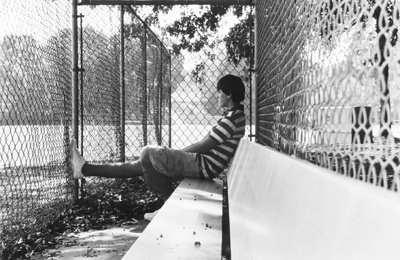
I once had a professor in graduate school that told us that “adolescence is a mental illness, and the only cure is time.” At the time I had a house full of teenagers and I tended to agree with her.
So what is it about being a teen that causes them to be so at odds with the rest of the world? What exactly is adolescence and how can a parent survive until they are in their twenties? That is the focus of this site. Each article will deal with some aspect adolescence and pre-adolescence. My aim is to help parent’s parent their teen effectively, with minimal anxiety; and to offer teens information and hope for getting through all the rough spots that make this time of life so difficult.
So let’s start at the beginning. Adolescence is a modern idea. It is a level of development that was conceived and brought into existence in the late 1800’s. Until that period in history childhood ended when s/he was capable of providing an income (for boys) or procreation (for girls). Essentially when childhood ended adult responsibility took its place, and this may have happened as early as 11 years of age for boys and 13-14 for girls.
Even in the early 20th century girls in rural areas were often expected to marry as early as 13 and little boys left home to find work. Until this time the idea of living at home, unemployed, and expecting parents to provide for them until they were in their twenties was virtually unheard of, and would have been considered outrageous. And up until the late 20th century children who had jobs were expected to turn over their earnings to their parent’s to help pay for their keep and to benefit the family. Flipping burgers to pay for a new car or fancier clothes wasn’t even a choice.
So what changed?
The industrial revolution, followed by the age of technology has changed the world forever. And one of the most significant changes is the introduction of the modern teenager. Part of the reason we seem to have little understanding of what makes teens tick is due to the fact that we haven’t had much time to study them. But one thing families and psychologists have discovered is that the role of the modern teen is vastly different than ever before. They are expected to mature emotionally before taking on adult responsibilities, and yet they have jobs, they become sexually active and they “feel” as if they are as mature as their out-dated parents.
Modern civilization has created an 8-10 year stage of life in which the people are sexually and physically mature, but are still being cared for and treated like children. They are clearly not little children, and yet they are also not yet adults. Is it any wonder then that their world is filled with angst and confusion? One day they need a hug and the next they don’t want anything to do with you.
The good news is that it is possible for both you and your teen to come through to the other side happy, healthy and unscathed. And I can help you do just that. Check back often to receive the help and support you are looking for.
If you have specific questions, or topics that you would like me to write about please leave a comment and I will take all suggestions into consideration.
----------------
Now playing: KXNT
via FoxyTunes
